Ans: The poem begins with the poet depicting the violent nature of the wind. During a storm, the wind forcefully breaks the shutters of windows and scatters papers throughout the room. It also knocks books off shelves, tears their pages, and brings heavy rain.
Q2: Have you seen anybody winnow grain at home or in a paddy field? What is the word in your language for winnowing? What do people use for winnowing? (Give the words in your language, if you know them.)
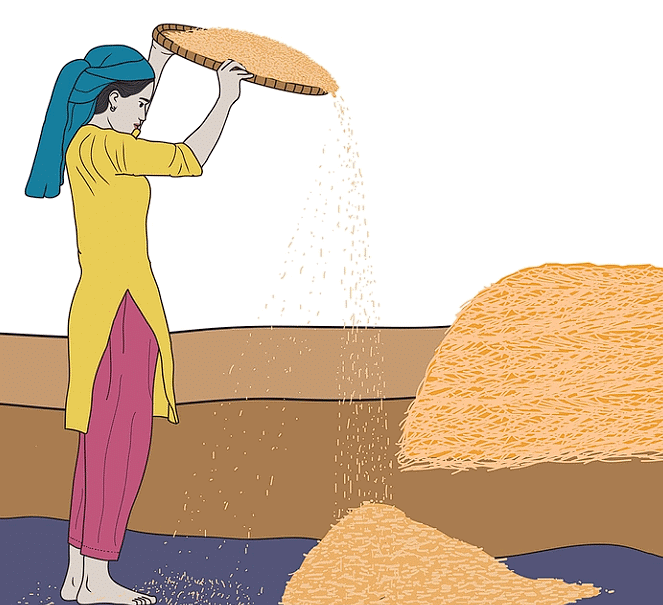 Ans: Yes, I have seen many women winnowing grain in villages. The term for winnowing in my language is pachhorana. For this process, people typically use a chaaj or a winnowing fan.
Q3: What does the poet say the wind god winnows?
Ans: The poet compares the traditional farming practice of winnowing with the destruction caused by the wind during natural disasters. Winnowing is a helpful process that allows us to collect grains for survival. In contrast, the fierce wind uproots everything in its path, including homes, wood, bodies, lives, and hearts. It completely crushes and removes them, leaving only the strongest to survive.
Q4: What should we do to make friends with the wind?
Ans: To make friends with the wind, we need to build strong homes with firm doors. We should also make ourselves physically and mentally strong by building strong, firm bodies and having steadfast hearts.
Q5. What do the last four lines of the poem mean to you?
Ans: In the last four lines, the poem reminds everyone to be strong-willed because it is highly unlikely that a storm will not hit them again. We should be mentally strong to face all the challenges that life throws at us. These challenges do make the weak heart crumble and extinguish like weak fires.
Contrary to its effect on weak people, challenges make the strong people stronger, just like wind makes strong fires roar and flourish. Having a positive attitude towards hardships not only makes them easier to deal with but also teaches a lesson that we carry with us throughout our lives.
Q6: How does the poet speak to the wind — in anger or with humour? You must also have seen or heard of the wind “crumbling lives”. What is your response to this? Is it like the poets?
Ans: There is a hint of anger in the poet's tone when addressing the wind. The strong winds can destroy the delicate things that humans have built, causing significant damage to both life and property. People are often forced to endure the harshness of nature. Storms, cyclones, and gales wreak havoc, uprooting trees, collapsing houses, and even taking lives. However, I do not fully agree with the poet's assertion that the wind merely crumbles lives. The wind also plays a vital role in bringing rain and supporting the water cycle. It helps to cool the land and carries pollen grains, which are essential for plant reproduction. Moreover, with advancements in technology, we now harness the wind's power through wind energy plants, showcasing its positive contributions.
II. The poem you have just read is originally in Tamil. Do you know any such poems in your language?
Ans: Yes, I have read another poem on wind. It is titled 'Toofan' and was originally written in Hindi by Naresh Aggarwal.


No comments:
Post a Comment